Saturday, January 26, 2008

Games do Irony: 3 examples


This is the fourth game in an established series of Xbox exclusives combining elements of Dynasty Warriors with the basic structure of Western RPG's (Ultima, Diablo and the like). The series has never really done that well with critics or players, but whoever decided to call it's latest installment Circle of Doom on the Xbox 360 took whatever credibility the series had, knocked it out, and then kicked it when it was down. Taken at face value just looking at the box of a 360 game called Circle of Doom is inherantly humourous regardless of whatever game content is inside the box.

I just hope the final boss of sorts is a huge fire-breathing dragon who's powers, if inflicted upon the hero, manage to heat up your 360's core cpu until the system in the real world shuts down, in the process creating
true immersion. That should be the ultimate way to die in Circle of Doom: the dragon catching you with his deadly breath, making you call the helpline again, and be without your xbox for 2 weeks to a month because those pesky Three Rings of Doom are back.
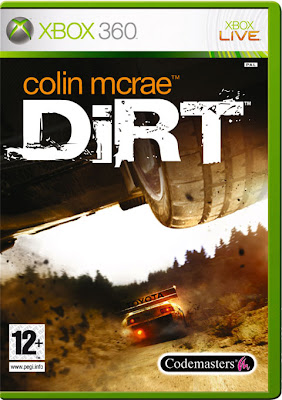

I was dummying/gutting games the other day at work and I got to this. When I dummy/gut something I have to put it's code and a description (ie the game's name) on the paper sleeve that houses the cd so that the other staff can easily find the game when everythings all filed away in draws. Now in an effort to be humourous/possibly offensive I was going to write Colin Mcrae: Dead, because Dirt and Dead are both four letter words that start with D, it's so punny! I thought about it for a while and realised that the use of the word Dirt in the context of someone being dead is just as funny.

Of course all of this is ironic because this was Colin Mcrae's last 'named' game before his tragic helicopter crash, which in itself is ironic seeing as he was a championship Rally Driver. Kind of like how what finished off Steve Irwin wasn't a Crocodile.
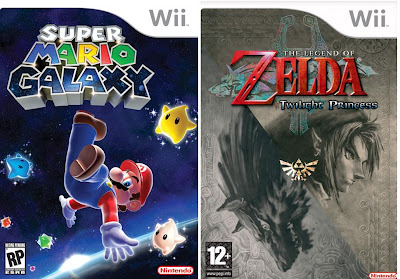


Okay maybe it's not all that Ironic but it is mighty strange that the Mario games got a fully orchestrated soundtrack before Zelda. Ever since the very beginning Mario soundwise has been all about the beeps and bloops and Zelda's style has been rousing scores. Super Mario Brothers in 1985 has one of the greatest pure midi sounding scores of all time, it has been said to have opened up a new world for developers in terms of what you could do with Midi. Then in 1987 with The Legend of Zelda Koji Kondo and his sound team attempted, with the many limitations the NES's sound capabilities presented, to create a rousing heroic main theme worthy of a hollywood film* and opened up the world all over again.

In Mario's teenage years (SNES, N64) the game series' soundscape took on a kind of reggae tone with carribean instrumentation and also briefly experimented with latin american instruments. In other words, not exactly what you'd find in a standard orchestra. All of this of course was done in Midi soundfonts. In later years, 2002 to be exact, Super Mario Sunshine played more with the Carribean tone, obviously inspired by it's setting.

1992's Legend of Zelda: A Link to the Past expanded on the sweeping rousing idea, especially with the introduction of melodies like the peaceful Kakariko Villiage theme and the heroic ending theme. In 1998, hot on the heels of his John Willliams inspired score for
Lylat Wars (Starfox 64), Koji Kondo and co. released The Ocarina of Time with a score heavy soundtrack that at the time rivalled some of the CD based soundtracks of around the same era.

For the purposes of background: In 2001
Super Smash Bros. Melee was released with a fully orchestrated soundtrack and an unbelievable amount of in-game content, so Orchestral Soundtracks turned out not be the space-guzzler they were once thought to be.

In about 2005/06 the real trailer (the one after the teaser) for
The Legend of Zelda: Twilight Princess came out using an original fully orchestrated composition and in doing so hinted that Zelda's soundscape might finally be getting what Final Fantasy fans had had since 1997. Sadly Miyamoto's fear of CD quality music interrupting game immersion, with a pinch of Zelda's good old friend time constraints, meant that in late 2006 Twilight Princess was released with a Soundtrack again generated by synthesizers. At the time this was largely criticised. General consensus among reviewers was that the score was Nostalgic, but not in the good way you usually associate with Nostalgia.

Then in 2007, the musicians behind
Super Mario Galaxy argued with Miyamoto and created something that was both epic in nature and also uniquely Mario, and all the Zelda fans were like "wtf man, this is bogus" or words to that effect. Super Mario Galaxy's music sometimes feels the smallest, tiniest, slightest bit out of place, but never as out of place as the weird ambient pieces we got in Ocarina of Time's dungeons.

IN OTHER NEWS:

The next 'Iwata Asks' is up at Wii.com and this time the subject is Super Smash Bros: Brawl. Make sure to read the Galaxy and Twilight Princess interviews as well if you haven't already.

The Jeff Gertsmann thing is Videogame's equivalent of Zidane headbutting a dude in the chest. 1up editor Sam Kennedy's blog post on the subject is brilliant.


- Danny

* John Williams is often credited for doing a live arrangement of the theme, this is widely regarded as false. Many people think the track's ID3 tag and subsequent popularity is purely peer-to-peer created: ie one misinformed western user came upon a performance of the theme by a Japanese orchestra, picked up on the heavy references to Williams' music and made a wildly uneducated guess.

Tuesday, January 8, 2008

Welcome to Video Game Webpage!

Hey there and welcome to Video Game Webpage, the hardcore gamer's FRESHEST source for industry news and gossip, as well as RELIABLE opinions and reviews! Let's dive right on in and have a look at what's in store this week.

First up on VGW, we've got some news that's gonna blow you away! Can you say... firmware update?! That's right, Home Console has been patched for 08, and in our update of updates, we go under the hood to see how the changes will impact your ProGaming. Hardcore gamers look no further!

We're hardcore gamers here at VGW, and we're not afraid to say when a game stinks. That's why you'll love our feature, Game Package Art Through The Ages - you'll never guess what kind of medical curiosity the Blue Bomber started out life as! And is that a minotaur in your pants, or... wait, let us start that one over.

In From Russia With FUN, part VII of our retrospective look at all things Tetris, we lift the lid on one of gaming's deepest secrets - how Alex Patchevsky's masterpiece was almost co-opted by the Russian Mob! That's right - if it weren't for a well-timed phonecall for Nolan Bushnell asking how to empty the change buckets, you might be playing Tetris with Viggo Mortenstern in Eastern Promise! We guarantee, no matter how hardcore, you've never seen ANYTHING like this!

If you're a hardcore gamer, you won't want to miss our feature on great flops through the ages. You'll never guess where 5000 copies of ET: The Extra-Terrestrial wound up buried - or how John Romero managed to savage his own reputation in a brutal self-raping with Daikatana! And who could forget the Nokia N-Gage? Not John Romero, that's who! If only people remembered John Romero...

While hardcore gamers like to have their fun, there are serious issues in videogaming, an art form now more profitable, respected, financially viable and high-stakes than the film industry. We lift the lid to go under the hood of one of gaming's hot-button issues: discrimination in games. Are we making room for the honeys? Jayde Raymond speaks out on being a honey in gaming - and wait'll you see the pictorial! Prejudice is so yesterday! And hardcore gamers, don't miss our featured preview of the new Def Jam game, which features your favourite urban ballers going head to head and getting sweaty. Sounds a little bit gay to us - but you didn't hear it here!

Every hardcore gamer knows you can always trust our reviews, because we say exactly what we think. If a game's not worth your time out of the box, we'll be the first to let you know. That's not an issue for DeathCon, the hot new sandbox free-roaming crime thriller that's like a Scorsese movie on your Home Console! Check out our 9.5 rating if you don't believe us. Also hot is DragonSword, the sandbox hack-n-slash rpg that's a must for fans of BloodSun or EtherGate! We give it a 9.7 - check our review!

Not all this week's games are winners, though - the eagerly-awaited SandCrash suffers in conversion. Still - such eye-candy! Pretty - we want! Check out our 9.3 review! And hardcore gamers only need apply to FrostSlash Academy - this one's plagued with near-unplayable bugs! Talk about broken - read our 8.7-rated review if you don't believe us!

Finally check our GamerBlogs, where we dish on what adventures your hardcore compadres have been getting into this month. And check Sbuppy HoonPants, our irreverent webcomic that's not afraid to shatter a few of hardcore gaming's sacred cows!

Until next time, VGW readers - stay hardcore!

Friday, December 14, 2007

Super Mario Galaxy

A Belated Review


The New Nintendo


Super Mario Galaxy is the New Nintendo. It's a landmark in Nintendo's history, like The Legend of Zelda: Ocarina of Time a couple of generations ago or Super Mario Bros. 3 way before it. The DS Lite is New Nintendo, the Wii is unquestionably New Nintendo, so it's unbelievably exciting to see that in an era when Nintendo has released arguably the greatest hardware of its' entire games developing career, they still have the ability to make software to match. Twilight Princess showed some promise at the beginning but ultimately ran out of juice and suffered from being lost in replicating the experience, look and feel of Ocarina of Time rather than being a new game – some speculate this was due to fan pressure after 2003's incredibly innovative but highly divisive Wind Waker*. Metroid Prime 3: Corruption started out fantastic but as you may have previously read turned into a garbled, chaotic, overly western-influenced, escort mission having mess.


So because of what had come before I never expected as much as I've got out of Super Mario Galaxy. Plenty of people before me have said this already but it is a good way of describing this game: if you look at Mario's 3D games as a trilogy, in relation to the NES trilogy that came before it, then Galaxy is really the Super Mario Bros. 3 of the bunch. Aside from the obvious, it being the third one and all, Mario 64 first set the tone, Sunshine was then interesting with an emphasis on experimentation (and also unfairly somewhat badly received**), and then finally Galaxy refined everything that had come before while harking back to the spirit of the original, like say Indiana Jones and The Last Crusade. Galaxy is without a doubt the one of the three that will be the most revered in later years. Super Mario Bros. is still a classic but today is incredibly clunky to play, suffers from limited level design, and has almost no concept of a difficulty curve. Super Mario Bros 3. recently got re-released on the Wii's Virtual Console amongst great fervour and got many people enjoying it all over again, and for good reason: because it's still a damn fucking good game.

Super Mario Galaxy has a style and overall polish about it that I haven't seen since something like Super Mario World 2: Yoshi's Island or The Legend of Zelda: A Link to the Past. This New Nintendo gives me great hope for a Starfox Wii title done right, or Super Smash Bros: Brawl being so much more than just a rehash of Melee.


Finally Settling In


One big part of the experience of Galaxy for me was that it feels like Mario is finally comfortable in the third dimension. Mario is synonymous with Platform games, so Galaxy is easily the best 3D platformer I've ever played because it feels like that by extension the genre itself is at last comfortable in the new dimension. Of course it took a Mario game to finally get us to this point.

In Mario's previous 3D adventures it broke down kind of like this:

Super Mario 64


Going in Mario didn't seem so entirely sure about this whole going 8 directions thing, and he had just recently entered the world of Acrobatics (back-flips, somersaults and the like), so he decided to do the whole adventure excruciatingly slowly. Seriously, go back and play that game and you'll find yourself long-jumping and belly-sliding everywhere just to get around at a decent pace. It's mind-numbing. Before 64 Mario mustn't have really been working out quite as much as he used to, he felt a great deal weaker. For instance when Mario would hit a wall, or even just run into one, this would cause quite a jolt and would often cause unnecessary deaths because of the reverb involved. In Mario's 2D adventures he'd just hit a wall and fall straight down it. The injection of quote unquote real world physics into the mix shouldn't turn a formidable action hero into such a lightweight.

Super Mario Sunshine


When it came time to have a vacation Mario decided to take things a little easier. So he quickly found Videogame's equivalent of Crutches, or even better Training Wheels, The F.L.U.U.D, and put it to great use, taking the place of many of his established and well renowned jumping skills. Being so excited at the prospect of his new water spouting safety-net Mario decided to run and jump around Isle Delfino almost as fast as Sonic on a bad day. When the Training Wheels came off (the Secret Stages***) his newfound love for speed resulted in many cut, scrapes, and booboos (deaths). Mario forgot how to jump in this game and relied too heavily on the power of his pack. He forgot probably the greatest jump in Platform Game history: The Long Jump.


Some of the jumps I could pull off in Sunshine using a combination of somersault, hover-nozzle, and belly slide I could just as easily pull off in Galaxy with the power of being awesome because the best designed piece of jumping in jumping history is back...and now it lets you orbit around planets.


Ever since the release of Super Mario 64 fanboys thought it was cool to say things like "Mario's really at home in 2D" and "when are we going to get another true Mario Game?" The most embarrassing thing for me is that I did agree with that line of thinking to a certain degree and I'm sure I've spouted similar phrases in the past. In 2006, ten years after Mario 64, the Fanboys got their wish with the DS's New Super Mario Bros**** which was very well received by critics and fans, however I was severely underwhelmed. The game felt somehow unlike a true Mario game despite trying so hard to be one. It was far too short and in some respects (namely music and animation) had decidedly poor production values. 
  I believe New Super Mario Bros and The Legend of Zelda: Twilight Princess both fall in a period where Nintendo were trying so hard to echo their former success and glory, most likely brought about by the decline of the N64 and then ultimate failure of the Gamecube, instead of actually designing a future software-wise. As I said at the beginning Super Mario Galaxy is New Nintendo so therefore it is also New Mario. I'm proud to say that now I feel like I don't need any more 2D Mario games, Galaxy is better than 'New' was in every way.


Welcome to the Galaxy

In terms of presentation Galaxy looks and sounds perfect. It all fits in with that sense of overall polish. The Graphics don't need to be any better than they are. They're flashy when they can be but ultimately they just serve the gameplay perfectly, which is all graphics should ever really do. It is somewhat odd that the Mario Franchise was the first of Nintendo's to receive a fully orchestrated soundtrack***** but after hearing the results the decision was a great one. It seems as if Miyamoto's philosophy of CD quality music having a poor technical relationship with the action in the game (on a midi level) and thus creating a lack of immersion for the player has been challenged. Maybe now I won't feel like I'm listening to a Portishead record when I go into a dungeon in the next Zelda game.

This is the hardest part of my review to explain, stuff in my head is rarely in proper written form you see: Super Mario Galaxy feels...well...different. I had been playing it for about an hour or so, adjusting to its changes after coming right off the back of freshly playing and finishing 64 and Sunshine in the lead up to its release, and I got to the first star in the Battlerock Galaxy. When I first went underneath and then on the side of the moving saucer to dodge an electric fence I got an unbelievably powerful sense that I was doing something new.

You'll see what I mean.

Danny


* I don't really side with this idea but that debate is for a whole different article.
**Super Mario Sunshine is a great example of vg critics contradicting themselves when the 'next big thing' comes out. When reviews for Galaxy started rolling in many made a habit of comparing its strengths against Sunshine's weaknesses. However, many of the strengths they mentioned were very similar, sometimes almost word for word, to what those same reviewers had said about Sunshine at the time of its release. I feel sorry for Sunshine, it was received very well at the time, and deservedly so, but in recent years has developed a reputation as a bad game. It's not a bad game. It's a very, very, very, very good game. But there is definitely something missing. It's just not a great game. Galaxy is though.
***That now look like Galaxy beta levels.
****And to a lesser extent the year after with Super Paper Mario.
*****Super Smash Bros. Melee doesn't really count because it involves second party developers.

Wednesday, December 12, 2007

Unfinished Ludology

I've just finished Final Fantasy XII. (Sephira, mutation, rebirth signified through vegetation, yadda yadda yadda). I've enjoyed it immensely, but here's the thing.

Know that feeling where you're nearing the end of a book you're really liking, and you find yourself rationing it, slowing your reading so it won't be over? Well, I had that in spades with Final Fantasy XII. But it's not until I was watching the ending that I realised that that feeling is different for games than it would be for a book or tv series.

Not Vaguely A Spoiler: In the final act of Final Fantasy XII - as is customary in a Squeenix adventure - all the game's Big Bads are just sitting up there in a big ol' Mana Fortress waiting for you to go kick their faces in, and you get the choice anytime whether to embark on the final showdown or just keep on adventuring about. And of course you could, theoretically, finish ALL the extra malarkey - the optional dungeons, completing the bestiary, hunting down all the marks, etc - before going to beat up the inevitable mutant angel-man. But you don't, because there gets a point where you go, this is silly, I'm just gonna see what this here North Cave is like, and then before you know it, bam!, The End.

Which is a fucking stupid choice of words. It's not the end. It's far from the end. There's still loads of Final Fantasy XII I haven't done. But then, there's also loads of Final Fantasy X I haven't done, and Metal Gear Solid 2, and Castlevania DS, for gosh sakes. But I know I won't be going back to those games for another big marathon, just as I doubt FFXII will keep me interested all the way to true completion, just as I'm putting off the (frankly, rather easy-looking) final finale of Phantom Hourglass for as many more secrets, piddling and expected, as I can.

I'm pretty sure I got everything I could in Secret of Mana and Link to the Past. I know I got absolutely fucking everything in Super Mario World. (On a rental, no less!) Hell, Terranigma was such a cunt that I got damn near everything even though I didn't manage to finish it (that savegame, of course, is now long gone).

There's interesting points to be made here on the overreliance on narrative within the RPG genre, the self-defeatist logic of making a game that's an absolute ludological revolution within its field and yet is narratively both less than compelling (or sense-making) and imposing of an artificial end on the proceedings.

But they are all overhadowed by the fact that Dan and I played through like a half dozen times and got every motherfucking thing you could in Goonies 2, which in a very real and palpable sense makes it the best narrative-hook game ever.

Monday, December 10, 2007

Congratulations, you're at Uni

[Warning: The text you are about to read contains heady intellectual discourse and is not recommended for anyone made queasy by the discussion of feminist film theory or psychoanalytical signifiers.]

So begins man Joe McNeilly's essay on why "Portal is the most subversive game ever". Basically, what Joe's done is to note that a portal, in Portal, looks kind of like a vagina (that's your psychoanalytical signifier) and is shot from a gun held by the unseen protagonist (feminist film theory).

It's a nice theory, and he's right in that it's nice that Portal uses a female protagonist without either sexualising or providing her with an honorary dick, but... "most subversive game ever"? Surely that award goes to the first RPG to have an NPC provide you with control pad advice then ask what a B button is? After all, Joe, that would be intra-medial interrogation of the conventions of genre through a post-human window of materiality!

Friday, November 30, 2007

Shock: Newspapers Oversimplify

Okay, let's have a checklist of things I'll not be swiping at here:

- The "Main Stream Media".*
- Politicians.
- Jack Thompson.**
- Those Snooty Brits.


But I went and read this story in the Sun expecting to feel the usual contrary little glimmer of support, and instead - horror! - found myself agreeing (to a point) with the geeks who're making it the target du jour of their ire.

A study of literacy at primary schools in 41 countries saw our youngsters slip from third to 15th in just five years.

Ministers claimed pupils spend so much time on consoles that they are not burying their noses in books.
Yeeessss, well... Your wording, Sun, gives away the whole game here.

The whole stereotype of kids "burying their noses in books" itself brings to mind not the vast majority of Commonwealth youth, but a spotty, speccy minority who would oft be lampooned in the pages of Buster and Whizzer and Chips for their quizzical literacy.

Surely the children spending three hours a day on games - which, between FFXII and Phantom Hourglass, I'd sometimes approach myself at the moment, and I've read Lolita AND Interview with the Vampire - aren't for the most part using their gaming to supplant nose-in-book-time? Surely that third of ten-year-olds are just (and to my mind this may actually be worse) playing games when they would otherwise be building forts and playing soldiers and the like? Surely it's not that Britain's youth are being tempted from Lord of the Flies to Lost in Blue, so much as they're replacing conkers with Conker's***?

Of course, this is a bit of sensationalist misdirection on the Sun's part (I'm as surprised as you are), as the story here isn't really "zomg video games are turning our kids into dullards" so much as it's "Pol bemoans standard of education, doesn't have answers". Giving several million pounds toward literacy is laudable, but you can throw all the money you like at education and it won't do much if you're not putting it in the right place.

It's a shame Steve Maharey has recently departed his position as our Minister of Ed here in New Zealand (his work was just beginning: our standards of literacy are even lower than the rather abysmal scores in the Old Country): along with not doing a terrible job at getting the bucks for the teachers, Maharey's passion for rebuilding education for the 21st Century was fairly tireless.

Modern education hinges on principles that make it abundantly clear that you can't expect any amount of hand-wringing or funds-appropriating to change the tech-savvy of today's learners. Nor should you. It can't be a case of education versus fun; and when this fact is realised, the resultant changes in outlook don't need to be implemented with a resigned sigh of "if you can't beat 'em..."

Oh, right, we're on a gaming blog! Sorry, that's what happens when you post from work. Anyway, the point I'm making is this: Danny's and my 14-year-old brother is proof positive that Ed Balls [pun reflecting both the quixotic misguidedness and hilarious name of Mr. Balls here].

I think Joe would agree that the #1 factor in his getting past his inherited dyslexia has been none other than his enthusiasm for what I guess we have to call the new media - his mastery of the written word was enabled largely by enthusiastic use of popular educational tool Runescape, and through the reading/writing interaction of games like this and (the Sun's pictorial example) The Sims, he's now an accomplished short story writer and the kind of reader who polishes off books like Wu Ch'eng-En's Monkey saga for fun.

So the real story here, not that the Sun will report it and not that the nerds will spot it through the red mist of their persecution complexes, isn't games ruining education, and it's not politicians ruining games. It's the story of a country whose education system doesn't realise that it's the 21st Century.

* A piece of mine appears in a free little print publication this week, and is quoted in strange, non-rollover-enabled static applets I'm seeing in the odd floppy RSS compendium sitting on the coffee table, and let me tell you, it's making me feel a lot more legitimate than the prestigious dotcom at which it originally appeared.
** Guy's got his head screwed on right. Isn't it odd how the people railing against him re: Manhunt 2 suddenly slowed their collective roll as soon as Manhunt 2 turned out to be rubbish? Surely if you really cared about the ill-informed interpretations of politics supposedly motivating your anti-Thompson diatribes, the quality of the media you seek to defend would be the very definition of a non-issue? But that's a whole nother post.
*** I know, I know, I was very proud of that myself.

Thursday, November 29, 2007

Extrapolating Your Extrapolations for Humorous Effect


There's plenty to be embarrassed about in Ars Technica's reporting of how Guitar Hero 3 sells music.

Perhaps the easiest thing to be embarrassed about (depending on how you happened on the story) is that a story on digital music traffic, the effect thereon of videogames, was covered on music-in-popcult blog Idolator, while their sister all-about-videogames blog Kotaku apparently missed the boat entirely*.

Also embarrassing is the seemingly rushed, fawning, isn't-technology-wonderful extrapolations from the figures**. Three of the bands supposedly reaping the most reward from the "Guitar Hero Effect" actually see marked growth in paid downloads for week of release, but then a drop in that (admittedly, still high) growth once the game has really had time to reach consumers.

It's safe to presume that the spike in downloads is the result of early adopters. The spike occurs on the week that ends on the day GH3 is released, meaning one of two things motivated those downloads: either

- GH3-heads are spending the week pre-emptively downloading everything they can from the final, final final, easter-eggs-and-all setlist; or
- Dorks who call themselves "hardcore" without a hint of irony are playing through the game on release day and downloading songs they like and/or hear as soon as they find them.

Now, these are both nice things to happen. It's always nice when people discover new music to like. But is it really changing the face of music if a few nerds realise that the Beastie Boys are kind of like MC Lars and thus worthy of a spin?

Embarrassing in a more business-as-usual kind of way is the attempts at legitimising this quickly-coined phenom: "a source close inside the music industry" is commenting on our data? Oh my, I bet it's Rick Rubin! And what does this source say?

"As long as your song ships with the game and you offer the track to be downloaded digitally, you see an increase.


"You don't say, dingus! Who'd have thought that making your track available for download would result in an increase in downloads?

Finally embarrassing is the clearest extrapolation from this confusing, half-story of a graph, which is that clearly, no Ars Technica staff were frequenting hipster bars during the big definitive-articles-are-the-saviours-of-rock boom of a couple of years back, which is hardly surprising. Look what they've done! With a simple de-pluralising, they've gone and made Julian Casablanca(s)' band name go and look dirty!

* Kotaku tend to operate on a siege-mentality us-against-the-world position common to geeks, so the easiest reasoning is that the story was passed over - despite Gawker blogs linking to each other whenever possible - on account of it didn't involve nerd-rage righteous indignation, naked non-actual women, or name-dropping re: the Kotaku staff saying nerdlinger stuff to awkward VG execs.
** To combat which, I am about to provide some rushed, ill-informed, isn't-technology-a-bubble counter-extrapolations.